Living the Principles of Sotai in Daily Life
I have previously explained that the Sotai Method is a movement-based approach to restoring balance in the body by guiding it toward directions that feel comfortable and natural.
However, Dr. Keizo Hashimoto, the founder of the Sotai Method, taught that Sotai is much more than a system of therapeutic movement. At the heart of his philosophy lies the principle of Breathing, Eating, Movement, and Thinking (“Soku-Shoku-Do-So”), emphasizing that opportunities for health and healing exist throughout everyday life.
Many discoveries from my clinical practice reflect this Sotai perspective. Among them, two simple habits stand out as particularly valuable: stretching before sleep and stretching upon waking.
Evening Stretching: Preparing the Body for Rest
Have you ever gotten into bed and found yourself unable to fall asleep?
Often, the mind drifts toward worries or unresolved concerns. The harder we try to stop thinking, the more awake we seem to become.
Personally, I sleep deeply almost every night. More often than not, I close my eyes and it feels as though morning arrives moments later.
One of the reasons for this may be a simple stretching routine I perform while lying in bed before sleep.
My focus is usually on the hips and lower body. The most important principle is to begin where the body feels comfortable.
These stretches are not intended to increase flexibility or push physical limits. Their purpose is to release the accumulated tension and fatigue of the day.
I hold each position gently for twenty to thirty seconds, applying only enough pressure to create a pleasant sensation of stretching, never pain. Difficult or uncomfortable movements are unnecessary. Even something as simple as drawing your knees toward your chest can be enough.
Breathing is equally important.
As you stretch, breathe slowly and deeply into the abdomen, allowing the breath to flow without holding it. The body gradually softens, and the mind becomes quieter.
When movement and breathing come together in this way, sleep often arrives naturally.
Morning Stretching: Turning On the Body’s Switch
My morning routine begins with a gentle facial massage to reduce overnight puffiness.
When the face feels swollen, the eyelids may seem heavy and the mind less alert. Puffiness can also contribute to the appearance of facial lines over time.
Using your fingertips and palms, gently massage the areas around the sides of the nose and in front of the ears, imagining puffiness softly draining toward the jawline. Because the movement is easier to demonstrate than to describe, I encourage you to watch the accompanying video on my website for a clearer understanding of the technique.
I then perform several simple facial stretches.
The facial muscles, known as the muscles of expression, are closely connected to the skin. By gently supporting the forehead and cheeks with the hands and lifting outward and upward, these tissues can be stretched comfortably. Holding each stretch for about twenty seconds is usually sufficient.
At the same time, I begin stretching my lower body while still in bed.
I alternately extend, rotate, and gently move my legs, gradually inviting the entire body to wake up.
With practice, even five minutes can make a remarkable difference. If I remember to include diaphragmatic breathing as well, the effect feels even greater.
The Conversation Between Body and Mind
Morning stretching often produces benefits beyond what most people expect.
The mind and body are deeply connected.
When you stand up and notice that your face feels lighter, your movements feel easier, and your body feels refreshed, a thought naturally arises:
“Today might be a good day.”
I like to go one step further and tell myself:
“Today is another good day.”
That simple change in perception often influences the way the entire day unfolds.
Physical comfort encourages a more positive outlook. Energy increases. Motivation appears more easily.
The opposite is also true.
When we begin the morning feeling heavy, stiff, tired, and uncomfortable, those sensations can quietly shape our thoughts and attitudes. Before long, both body and mind seem to agree that it will be a difficult day.
Our bodies influence our thoughts, and our thoughts influence our bodies.
Beyond Movement
The Sotai principle of moving toward comfort applies to more than physical movement alone.
It can also guide the direction of our thinking.
The stretching practices I have described before sleep and after waking are among the daily habits I most strongly recommend. They require no equipment, very little time, and yet they can significantly change how we experience ourselves each day.
In my clinical practice, I also advise patients about standing, sitting, walking, lifting, lowering, and reaching for objects. These ordinary actions all provide opportunities to apply Sotai principles within movement.
Breathing accompanies movement.
Food influences health.
Thought shapes our relationships with others and with ourselves.
Together, these form Dr. Hashimoto’s principle of Breathing, Eating, Movement, and Thinking.
Sotai is not merely a treatment method. It is also a practical way of observing and engaging with everyday life.
I hope to continue sharing these discoveries in future writings.
Blog
posted on / category: column “Breath Eating Moving Thinking”
Sotai-Inspired Stretching: How to Avoid Stretching-Related Injuries
Sotai-Inspired Stretching:
How to Avoid Stretching-Related Injuries
In this article, I would like to explore a Sotai-inspired approach to stretching and discuss how it may help prevent stretching-related injuries.
Sotai is a form of movement therapy that guides the body toward directions of ease and comfort. A movement is performed gently, followed by a brief contraction and then complete relaxation.
Ordinary muscle tension is not created by muscles acting independently. Rather, it is regulated through continuous communication between the brain and the muscles. Through this communication, the body maintains an appropriate level of muscular tension.
However, when we repeatedly adopt unbalanced postures or movement habits in everyday life, certain muscles and joints are subjected to prolonged tension. In such cases, the brain continues sending signals that maintain excessive muscular contraction, making it difficult for those muscles to relax.
Sotai aims to interrupt these unnecessary tension signals. By moving comfortably in a direction that feels easy, applying gentle force, and then releasing it, the nervous system is encouraged to return to a more neutral state.
Let us now apply this concept to stretching.
When we picture athletes warming up before practice, we often see a group of people performing the same stretches, in the same order, and with roughly the same intensity. Likewise, individuals often focus their stretching efforts on the areas that feel the stiffest.
From my perspective, this sometimes looks as if people are trying to force a stiff body to become flexible through persistence alone.
But stretching should not be an act of attacking the body.
Dynamic stretching before exercise is intended to improve joint mobility and reduce the risk of injury. Static stretching after exercise is intended to promote circulation and help the body recover from fatigue.
What I would like people to add to these practices is a Sotai perspective.
Instead of beginning with the stiffest or most uncomfortable area, start with the movements that feel easiest and most pleasant. Explore comfortable movement first, and leave the more challenging areas until later.
When stretching begins in a painful area, pain signals are sent from the muscles to the brain. The brain may interpret those signals as a sign of danger and respond by tightening surrounding muscles as a protective measure.
As a result, the body enters a cycle of defensive tension. The same areas may repeatedly feel tight, stretching becomes increasingly unpleasant, and over time excessive force may contribute to strain or imbalance. This is what I refer to as a stretching-related injury.
For many years, I have told my patients a simple principle:
“Become skilled at what feels easy. Take it lightly where it hurts. If a movement feels unpleasant, stop.”
This advice is especially important when people perform stretches together in a group setting. Without proper guidance, some individuals may ignore their own discomfort and simply follow the movements of those around them.
When the principles of Sotai are applied to stretching, the practice becomes much simpler:
Become skilled at what feels easy. Take it lightly where it hurts. If it feels unpleasant, stop.
Rather than forcing the body to change, this approach respects the body’s own signals and encourages natural flexibility through comfort and ease.
“Therapeutic Attunement in the Sotai Method”
If you watch my YouTube videos on Sotai exercises for self-care at home, you will notice that I begin each treatment session with a gentle foot and toe massage before introducing the Sotai method itself.
I regard this as more than a simple preparatory technique. It helps create a relaxed atmosphere between the patient and practitioner and establishes trust within a short period of time. Building this connection is an essential part of the treatment process.
Sotai is a therapeutic approach that seeks comfortable and natural movements to help restore balance within the body. By guiding the patient to move in directions that feel easy and pleasant, it aims to reduce unnecessary muscular tension and support the normalization of neuromuscular function.
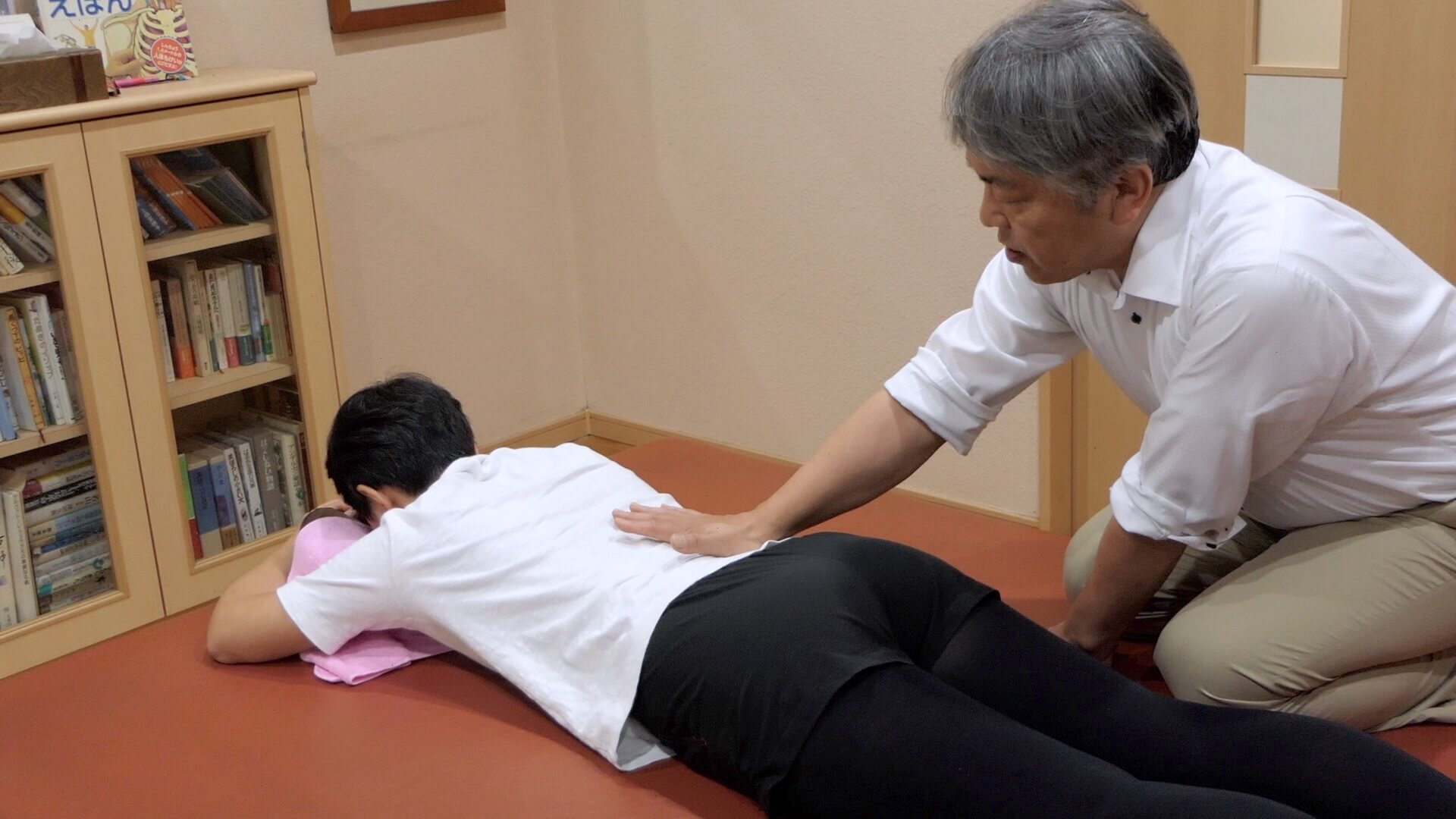
During treatment, the practitioner gently supports the patient’s movement and provides light resistance in the chosen direction. This allows the patient to engage naturally with the movement without force or strain.
At the heart of Sotai is a subtle but important interaction between the patient and the practitioner. As the movement unfolds, both become increasingly aware of the patient’s range of motion, level of effort, and sensations of comfort or discomfort. This shared awareness helps the practitioner respond appropriately while encouraging the patient to develop a deeper understanding of their own body.
Although Sotai is generally considered a safe and low-risk therapeutic method, its effectiveness depends greatly on the quality of this interaction. When the practitioner’s perception and the patient’s experience are closely aligned, treatment can become more precise, responsive, and meaningful.
People differ in age, gender, life experiences, and personal values, yet we all share the same fundamental human structure. When trust is established between practitioner and patient, treatment becomes a collaborative process. Together, they can explore the underlying causes of symptoms, consider possible solutions, and work toward improvement.
Why I Begin Sotai Therapy from the Feet
In my previous article, I discussed why I use massage of the toes and feet as the introduction to treatment. Here, I would like to explore the process of moving from foot massage into Sotai therapy and how this approach connects with the patient’s sensory awareness.
One reason I begin Sotai therapy from the feet is that careful palpation of the toes, soles, ankles, and surrounding tissues often reveals valuable information about a person’s characteristic movement patterns and habitual ways of walking. Through touch, the muscles and skeletal structure begin to tell the story of how that person uses their body in daily life.
As practitioners of Sotai therapy, we assist patients in exploring comfortable and natural movements. In doing so, it is important not only to listen to the patient’s verbal history but also to observe what the body expresses through touch and movement. Everyday habits, postural tendencies, and movement patterns are often performed unconsciously and may not be recognized by the patient themselves. These hidden habits can be detected through palpation and through the resistance encountered during guided movements.
Dr. Keizo Hashimoto, the founder of Sotai, referred to this method of examination through movement resistance as Doshin (“dynamic observation through movement”).
Let me illustrate this with a recent case.
An elderly woman in her eighties came to my clinic complaining of acute neck pain accompanied by numbness in both hands. She could not identify any particular cause for the onset of her symptoms.
While examining her in the prone position, I compared her ability to turn her head to the right and left. When she rotated her head to the right, her right pelvis elevated and appeared to draw the right leg upward by approximately one centimeter. When she turned her head to the left, a similar elevation occurred on the left side. Such asymmetrical tension patterns are often observed in patients who have experienced whiplash-type strain, even when no obvious trauma is remembered.
As usual, I began treatment from the feet.
As I guided Sotai movements from the toes upward toward the hips, I found surprisingly little difference in tension between the right and left lower extremities. This absence of significant asymmetry itself became an important clinical clue.
I then asked, “Have you been spending a lot of time looking downward while working?”
At that moment, she recalled that she had spent two consecutive days doing sewing work shortly before the pain began.
The prolonged forward-head posture associated with sewing had likely produced excessive musculoskeletal tension and nerve compression, resulting in her symptoms.
From there, treatment progressed sequentially through the trunk, upper limbs, and cervical region using Sotai principles. Her symptoms gradually improved.
This case raises an important question: What might have happened if I had begun treatment directly with movements of the head and neck?
In my clinical experience, treatment of the cervical region is often less effective when tension remains unresolved in the lower body and trunk. Unless the foundational balance of the body is restored, it is difficult to achieve lasting balance in the head, neck, shoulders, and upper extremities. Just as a building cannot be corrected by adjusting the roof alone, the body’s upper structures depend upon the stability of the foundation beneath them.
There is another important consideration.
Patients who visit with neck pain and numbness in both hands are often understandably anxious. By beginning treatment in areas distant from the painful region, patients can first experience movements that feel safe and comfortable. This helps reduce anxiety and encourages trust in the treatment process.
As treatment progresses in this way, I often find that an image of the underlying cause of the patient’s condition gradually emerges. The body begins to reveal its story.
One of the fascinating aspects of Sotai therapy is precisely this: treatment does not necessarily begin at the site of pain. Instead, by approaching the body from distant, less threatened regions, we can uncover both the cause of dysfunction and the path toward recovery.
After treatment, I advised the patient to wrap a towel around her neck, similar to a soft cervical collar, when performing household chores or sewing. This simple measure helps limit excessive neck movement and reduces strain during prolonged periods of looking up or down.
In Sotai therapy, we do not always begin where the symptoms appear. We begin where the body is willing to communicate.
Stress and creativity created by the discrepancy in the way time progresses for each individual
The earth rotates on a 24-hour time axis, but have you ever been aware that each person’s time axis is different? Also, personal time axes can be different depending on the situation.
For example, many people may feel that time passes quickly during the first few moments after waking up in the morning. For example, many people feel that time moves faster during the period after waking up in the morning, but during the period after waking up, the brain does not process information as quickly as it should, so there is more wasteful movement and relatively less time. And the more impatient you are when you oversleep and prepare for the day ahead, the faster time seems to flow.
When driving a car, the time axis of each individual is clearly visible. Some people become irritable, hurried, and dangerous from the moment they get behind the wheel, while others drive so slowly that it seems like a nuisance to those around them. I had thought that those who are easily irritated by driving or those who are nuisance drivers who cannot adjust to the flow of cars around them may have a strong sense of occupation with the road in front of them while driving, but in reality, they have a personality that makes it difficult to adjust their own time axis to the surrounding environment, which can be explained in relation to many things in life in general. This can be explained in relation to many things in life in general.
People whose personalities do not match, people who are easy to be with, people who are irritating, people who are good at group activities, people who are not good at group activities, people who are easy to talk to, people who are hard to talk to, people who listen to others first, people who disagree first, and so on are examples of how time axis differences manifest in relationships in all aspects of life. These are just a few examples. As a result, in our relationships, we can be creative in our conversations and responses, enjoy our conversations, deepen our thoughts, or experience strong stress. The ability or inability to adjust to each other’s time frames makes the difference between those who are aware of time frames and those who ignore them in their social relationships. In the beginning, when lovers are eager to get to know each other, they believe that no one else is as compatible, but as the relationship lengthens, progresses into marriage, and they stop trying to get to know each other, many begin to wonder why they are with someone with whom they are not comfortable. I do not necessarily believe that one’s time line must always be in sync with others and one’s surroundings. However, I do believe that there are many times when we need to consciously create an environment where we are on the same time line.
I mentioned driving as an example, but there are many ways to adjust the time axis on roads that are used by an unspecified number of people. Speed limits and overtaking bans are easy to understand, but there are also some unusual devices such as flashing lights in tunnels that act as pacemakers to maintain speed. Various road signs and devices are used to reduce accidents by making the unspecified number of people aware of the same time axis. If a vehicle that ignores the time axis appears on the road, the risk of accidents will increase dramatically.
It is recognized that sharing time frames in group activities and corporate organizations tends to increase work efficiency. However, it is important to be aware that sharing all time frames, such as waking, eating, resting, and sleeping, like in a prison, tends to deprive individuals of time to think and create a group activity or organization that deprives them of their individuality. The point of the methods used for brainwashing education in prison-type camps, such as training camps for new religions, employee training, and remote training using social networking services, is to deprive people of time frames and put them under the control of the organizer. If you want to create a manageable group organization without malicious intent, you need to be aware that the organizer is depriving individuals of their time axis. While sharing a time axis tends to increase work efficiency, it also suppresses the emergence of individuality and ideas, in other words, it makes people give up the ability to think. The same can be seen in family life. A child raised in a family environment that is extremely paternalistic and motherly, and that corrects the family on its own time axis, may outwardly look good, but it will lack the germination of individuality, lack creativity and research, and lack artistic ideas.
I am not saying that shared time lines are all bad. If the memories of a shared time line are pleasant ones, family bonds are strengthened. If people feel that they are sharing meaningful time lines, they can achieve organizational goals. Not dominate all time lines, but eat breakfast and dinner together and have conversations when the children are young, even if only for short periods of time. Make time to read to them at bedtime and enjoy conversation. Go out together. Watch the same movies. Read the same books. Think together. Even if it is only for a short period of time, the memory of sharing a time axis with your children, partner, or family becomes the foundation of a trusting relationship. The same can be said for group activities, corporate organizations, and school activities. Brainstorming to solve a problem by imagining a single brain shared by the entire group in a virtual space can bring out more ideas than you think, even in a short period of time. Without the free flow of individual ideas, social stagnation begins, but without the ability to share a time axis with others, ideas will not develop. Whether it is a family, a company, or a group of strangers, we believe that an environment and awareness of the need to share a time axis is necessary.
Each of us has our own time line. We feel stress when we are aware of time axis discrepancies not only in our homes, schools, workplaces, shopping at convenience stores, and other situations where we need to communicate with others, but also in hotels where computers are used as receptionists and even in vending machines for beverages. Without the awareness and ability to adjust our time axis to some extent, we will create situations and relationships that are stressful for both parties, even when we are in close proximity and even when we are just passing each other.
To summarize in general terms, each of us has the ability to be aware of our own time line and adjust ourselves to our surroundings, although it is difficult for each of us to modify the time line of others and adjust ourselves to it. We also have the ability to maintain a sense of normalcy and observe our surroundings rather than being swept along by them. By being aware that each person has a different time axis, I feel it is important to sublimate stress into creativity and create an environment where we can coexist and co-prosper without unnecessary conflict with others and other countries. even if the 2024 Olympics will not be the stage to realize world peace, we share the same rules, I hope that the 2024 Olympics will not be a stage for the realization of world peace, but will be a meaningful gathering of people from all over the world who share the same rules and participate in and watch the games with the awareness that we are living on the same time axis on the earth.
Sotaiho as a theory of motion. Sotaiho as ideology.
Sotaiho method is a therapeutic method that restores the body’s balance while looking for the direction in which the body can move comfortably. However, those who view the Sotaiho method only as a treatment method may be viewing my YouTube videos and perceive the Sotaiho method with a false perspective, such as, “Massage is not a Sotaiho method,” or “It is a sham because it measures the length of the legs. In reality, we do not measure the length of the lower leg bones, but rather we observe the balance of the entire body while comparing the length of the lower limbs visually.You can immediately feel that by moving your body in a comfortable direction with Sotaiho, you can restore balance to your body, as you can see in my YouTube video “Manipulative Bodywork Sotaiho You Can Do at Home (Sotaiho You Can Do While Sitting). Sotaiho ,Although manipulative body movements are performed in the direction of ease in order to relieve muscle tension, the actual action is on the brain, which controls muscle tension. In this sense, there is a fundamental difference in theory from approaches that attempt to restore muscle flexibility by physically stretching or physically firmer muscles.
“Sotaiho” is an exercise therapy that moves the body in a comfortable direction, stopping signals transmitted by the brain that force excessive tension, and guiding the brain’s information itself to a neutral state. This is where “exercise diagnosis” and “exercise therapy” come into play. The symptom to be improved is unbalanced tension in the muscles related to the motor cortex of the brain. Therefore, it is not possible to improve visceral reflex pain induced by visceral disease. This is one of the advantages of incorporating the “Sotaiho Method of Exercise Therapy” into daily relaxation therapy: by using the “Sotaiho Method,” it is possible to determine whether the pain is due to trauma, unbalanced muscle and joint tension caused by daily life, or a medical cause. It is also possible to determine the medical cause of the pain. Even if the medical cause of the pain is not known, it is possible to detect abnormalities and recommend early consultation.
Many patients with stroke, myocardial infarction, gastric ulcer, gallstones, ureteral stones, acute leukemia, aortic dissection, cancer, and other diseases also come to our hospital complaining of pain in the motor function at the beginning. Of course, there is almost no improvement with Sotaiho. In addition, pain in the motor function induced by medical diseases is characterized by the fact that the pain continues even when the patient is at rest and there is no posture that does not cause pain.
When Sotaiho is viewed as a theory of exercise, the relationship between muscle function and the brain can be considered from a new angle. The concept of Sotaiho, which moves the stress of pain so that it is not transmitted to the brain, can evolve the way we practice sports. For example, in stretch training, flexibility can be safely and easily restored by starting with areas that are easy to stretch, rather than starting with areas that are stiff or painful. Similarly, in warming up for practice, starting with easy movements will make it easier for the body to move than starting with movements that are uncomfortable. It is also understood that, from Sotaiho perspective, massage works by rocking the muscles, not by strong acupressure or kneading that can cause pain. In daily life, it is understood that avoiding unbalanced stress helps to maintain balance.
It can be said that since humans acquired language and began to use tools in their daily lives, their bodies have become prone to an unbalanced state of bipedalism. In addition, the lifestyle of modern society requires more simple work in flat situations, and conscious exercise time is necessary to reset the body’s unbalanced state and return the brain’s function to a neutral state. This is where the theory of Sotaiho exercise becomes necessary.
It is not sotaiho-like to train the body by forcing it to do hard things. That does not mean that you should not force yourself and leave it to others. If you think that practicing more than others toward your goal will make you stronger, you will practice breaking your body; if you think Sotaiho-like, you will always find a way to practice that suits you differently from others, and you will continue to practice and see the results. A specific example is walking. By being aware of each step you take, your brain is constantly aware of the balance of your entire body, and feedback is repeated between the conscious and unconscious mind. When the brain is able to maintain body balance even in the unconscious state, the running form becomes more stable and the body becomes aware that the core muscles are being used properly.
What I have realized through my long practice of manipulative bodywork as the basis of my medical practice is that manipulative bodywork has become the foundation of my philosophy. If we look at manipulative bodywork as a theory of movement, we can say that the theory of manipulative bodywork is to bring the muscles into a neutral state through the feedback of conscious and unconscious brain activity. I believe that the idea of restoring the body’s unbalanced state while searching for a comfortable direction is important not only for exercise, but also for our thinking. There is an expression “seeing at ease. In other words, to see peacefully. If we treat each other with a harsh mind, conflict will arise. Problems that cannot be resolved in a debate can be resolved in a discussion. If we can have discussions that lead our relationship in an easy direction by recognizing each other’s way of life, we believe the world will change. If you live with an irreverent attitude, only irreverent friends will come to you. Irreverent friends are also irreverent in the way they betray you..
I am not able to develop the logic to understand the Sotaiho method as a system of thought. However, I am convinced that many people can experience a glimpse of the Sotaiho method as an idea that can be experienced by reviewing the current exercise theory and incorporating Sotaiho legal thinking into their lives by trying a treatment method that can be experienced by anyone.
The soul is a transparent paint created by the heart

The soul is a transparent paint. Don’t you think it’s nice? Last time, I wrote that “the body is the cradle of the soul given by the earth” and “the key is the fantasy”, but the root of that idea is that I feel that the soul is a transparent paint created by the heart. To tell the truth, it is more my sense to say “I know that. I know” rather than “feel”. Intuitively, it feels like “yes”.
A way of life that puts age in (parentheses)

I had the opportunity to listen to Professor Hayao Kawai’s lecture and flute performance. I went to a children’s bookstore called Merry-Go-Round in Yokkaichi, Mie Prefecture.
Children are gifts, bodies are borrowed

We say “children are gifts from heaven”, which means that “not only your own children but also the children of others are gifts from heaven, so you have to take good care of them.”
Due to the harmful effects of the nuclear family, the number of parents who cannot raise their children is increasing, but it seems that many people think that it was normal for their grandfathers to raise their children rather than their parents. It is true that the main characters of both Momotaro and Kintaro are raised by grandfathers and grandmothers and play an active role, so it is doubtful that if they were raised by young parents, they would have grown up to be gentle and fine young men. It was a good rampage and may have ended.
Senile … / Due to aging …

“If asked to take X-ray at the hospital, senile of low back pain Nante said to be the chat Gakkarishi”
“Oh, this is I do not heal and not surgery because the knee of the old”
“I because it is old ……”
and so on, some Even if I become ill, I am disappointed when my symptoms are judged because of my age.