In my previous article, I discussed why I use massage of the toes and feet as the introduction to treatment. Here, I would like to explore the process of moving from foot massage into Sotai therapy and how this approach connects with the patient’s sensory awareness.
One reason I begin Sotai therapy from the feet is that careful palpation of the toes, soles, ankles, and surrounding tissues often reveals valuable information about a person’s characteristic movement patterns and habitual ways of walking. Through touch, the muscles and skeletal structure begin to tell the story of how that person uses their body in daily life.
As practitioners of Sotai therapy, we assist patients in exploring comfortable and natural movements. In doing so, it is important not only to listen to the patient’s verbal history but also to observe what the body expresses through touch and movement. Everyday habits, postural tendencies, and movement patterns are often performed unconsciously and may not be recognized by the patient themselves. These hidden habits can be detected through palpation and through the resistance encountered during guided movements.
Dr. Keizo Hashimoto, the founder of Sotai, referred to this method of examination through movement resistance as Doshin (“dynamic observation through movement”).
Let me illustrate this with a recent case.
An elderly woman in her eighties came to my clinic complaining of acute neck pain accompanied by numbness in both hands. She could not identify any particular cause for the onset of her symptoms.
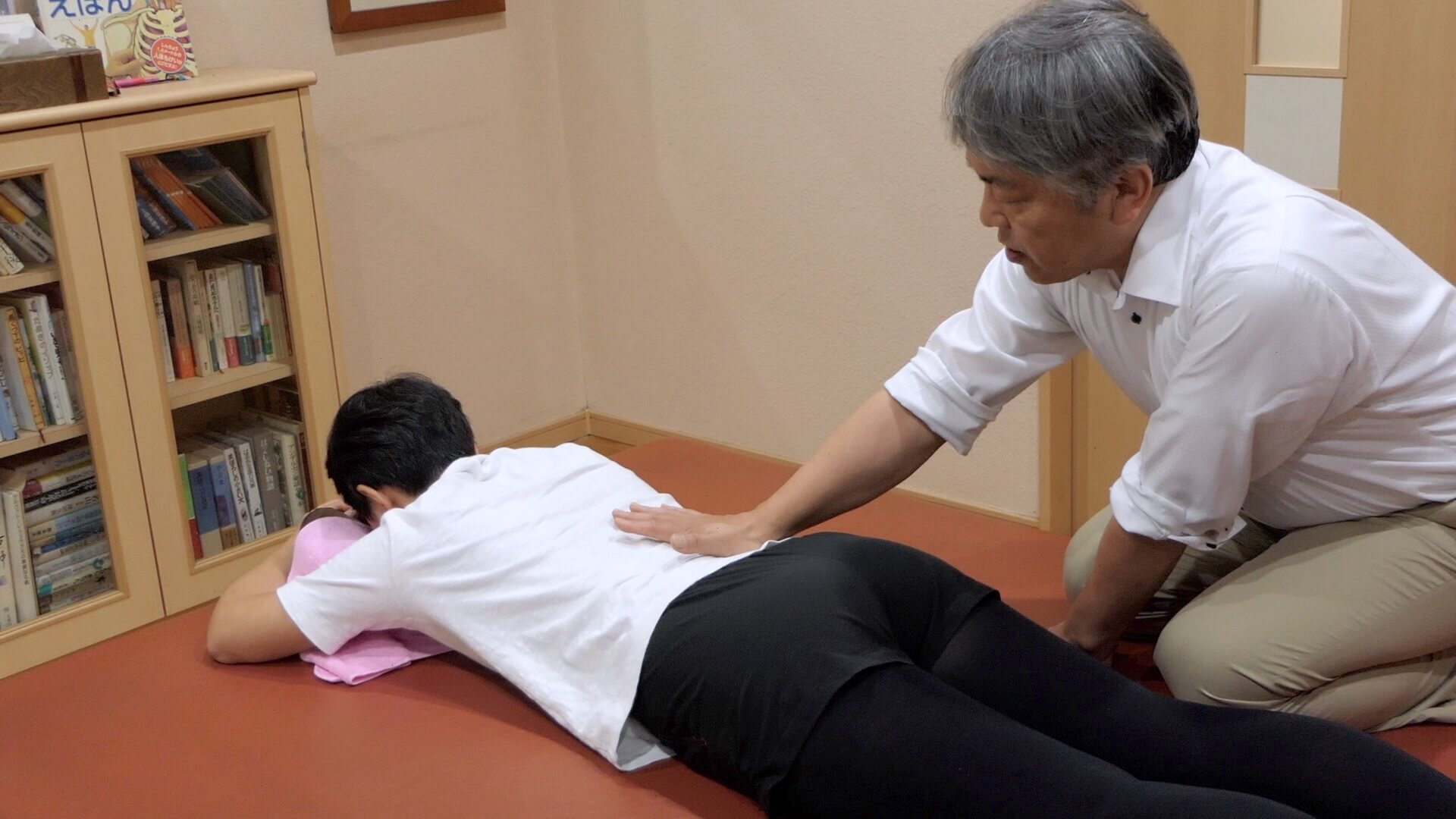
While examining her in the prone position, I compared her ability to turn her head to the right and left. When she rotated her head to the right, her right pelvis elevated and appeared to draw the right leg upward by approximately one centimeter. When she turned her head to the left, a similar elevation occurred on the left side. Such asymmetrical tension patterns are often observed in patients who have experienced whiplash-type strain, even when no obvious trauma is remembered.
As usual, I began treatment from the feet.
As I guided Sotai movements from the toes upward toward the hips, I found surprisingly little difference in tension between the right and left lower extremities. This absence of significant asymmetry itself became an important clinical clue.
I then asked, “Have you been spending a lot of time looking downward while working?”
At that moment, she recalled that she had spent two consecutive days doing sewing work shortly before the pain began.
The prolonged forward-head posture associated with sewing had likely produced excessive musculoskeletal tension and nerve compression, resulting in her symptoms.
From there, treatment progressed sequentially through the trunk, upper limbs, and cervical region using Sotai principles. Her symptoms gradually improved.
This case raises an important question: What might have happened if I had begun treatment directly with movements of the head and neck?
In my clinical experience, treatment of the cervical region is often less effective when tension remains unresolved in the lower body and trunk. Unless the foundational balance of the body is restored, it is difficult to achieve lasting balance in the head, neck, shoulders, and upper extremities. Just as a building cannot be corrected by adjusting the roof alone, the body’s upper structures depend upon the stability of the foundation beneath them.
There is another important consideration.
Patients who visit with neck pain and numbness in both hands are often understandably anxious. By beginning treatment in areas distant from the painful region, patients can first experience movements that feel safe and comfortable. This helps reduce anxiety and encourages trust in the treatment process.
As treatment progresses in this way, I often find that an image of the underlying cause of the patient’s condition gradually emerges. The body begins to reveal its story.
One of the fascinating aspects of Sotai therapy is precisely this: treatment does not necessarily begin at the site of pain. Instead, by approaching the body from distant, less threatened regions, we can uncover both the cause of dysfunction and the path toward recovery.
After treatment, I advised the patient to wrap a towel around her neck, similar to a soft cervical collar, when performing household chores or sewing. This simple measure helps limit excessive neck movement and reduces strain during prolonged periods of looking up or down.
In Sotai therapy, we do not always begin where the symptoms appear. We begin where the body is willing to communicate.